|
| 1/2 lb size silk gown with vintage trim | | | |
|
*Note: this entry is continually updated. For new photographs please scroll to the bottom of the page.
Since the death of my youngest daughter I have been making these tiny gowns, hats and blankets for St. Peter's Hospital labor and delivery department. My daughter was not born there, but it is where my husband and I go for our baby loss support group. The hospital relies on donations from the community for the memory boxes and little clothes the nurses give to bereaved parents.
 AdiaRose was born at Albany Medical Center. The nurses who took care of us in the recovery room were so kind, and they knew just what to do: to take pictures and to make little footprints. They gave us a memory box and a knitted hat and a handmade dress for AdiaRose to wear. Our nurse told us that other mothers who had lost their babies made the little clothes in small sizes, and they had them ready for anyone in need. It hit me then that our daughter would not have had the dignity of clothes that fit if it hadn't been for these mothers and the nurses who care so much about their patients.
 |
| Forget-Me-Nots |
I wanted so badly to make her something to wear in the week between her birth and her funereal, but all I managed was a pink silk swaddle to wrap her in, underneath the cozy warm baby blanket I had made for her in anticipation of her November due date. The shock, the grief, the preparations for her memorial service and celebration of life, left me drained and unable to wrap my mind around constructing a garment. So she was buried in the only clothes we had that she ever wore, that lovely baby blue eyelet gown and little knit hat.
The little gowns, hats and blankets shown here are my effort to repay the kindness of the women who made those clothes. I don't know their names, but I am forever grateful for the gift they gave to us: that they had been thinking of us before we ever even needed them. Everything was waiting. Our daughter was dressed as beautifully a princess. The comfort that honor gave us can't be put into words.
 These are just a
few of the sets I have made. They range in size from 1/2 lb to 1-3lb sizes.
The tiny hat and blanket are for even smaller babies. I also make little
buntings for these babies. I like using vintage tatting, lace and trims
to give the little outfits an heirloom feel. Since I don't know how to
knit I make the hats out of stockinette and baby rib knit fabric, with
pompoms made from embroidery floss. I use new and vintage fabrics for
the dresses and blankets- whatever I can find that is cozy and
beautiful.
These are just a
few of the sets I have made. They range in size from 1/2 lb to 1-3lb sizes.
The tiny hat and blanket are for even smaller babies. I also make little
buntings for these babies. I like using vintage tatting, lace and trims
to give the little outfits an heirloom feel. Since I don't know how to
knit I make the hats out of stockinette and baby rib knit fabric, with
pompoms made from embroidery floss. I use new and vintage fabrics for
the dresses and blankets- whatever I can find that is cozy and
beautiful.
For a 3-5lb size gown, I use beautiful salvaged hand embroidery from vintage pillowcases to make the border on the bottom of the gown. I love the care of hand embroidery, and the sense of history these give to the gowns. Worn by babies who are leaving us all too soon, they can at least take these things from this world.
I make these gowns and blankets and hats with love in every stitch,
and with a prayer that they give some small comfort to grieving parents
and honor their babies, and with a wish that no one will ever have a
need for them.
 |
Vintage eyelet, handkerchief linen and
trim, hand embroidered heart, 3/4lb size gown.
|
|
|
|
 |
Embroidered heart on rosebud blanket.
|
 |
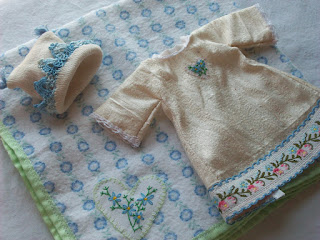
Linen gown with vintage trim, vintage flannel blanket, hat with
vintage hand crochet lace, 1-3lb size. |
 |
Stockinette, hand crochet vintage lace, and embroidery floss.
|
 |
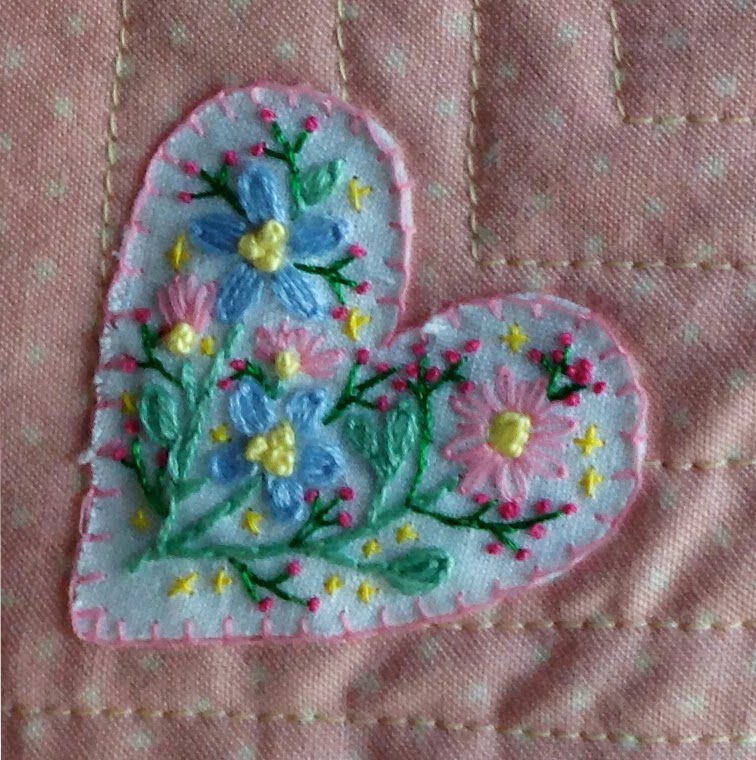
Forget-me-not heart on linen gown.
|
 |
Forget-me-not heart on linen, appliqued on
vintage flannel blanket.
|
 |
Baby rib knit hat with vintage lace and embroidery
floss pom-pom, 1/2 lb size.
|
 |
Vintage cotton lawn gown trimmed with vintage lace, vintage flannel
blanket and baby rib cotton hat, 1/2 lb size.
|
 |
| Forget-me-not heart on blanket. |
 |
Tiny hat and blanket with vintage trim and applique
and an embroidery floss pom-pom.
Embroidered heart detail on bunting.
 |
| Bunting made with vintage trim, blanket stitching and embroidered heart. |
Gown, hat and flannel patchwork quilt for 1/2lb baby.
Gown, hat and flannel blanket for 1/2lb baby. Vintage
trims and hand embroidered hearts.
Little hat detail. |
|
 |
| 1/2 lb size gown with angel wing sleeves |
 |
Cashmere bunting with hood, cross over front and
angel wing sleeves, 1-3lb size |
|
 |
| Hood detail- adjustable drawstring |
 |
| Sleeve detail-blanket stitch edge |
 |
Tri-fold hooded bunting 1/2-3/4lb size,
designed for delicate babies |
 |
Tri-fold bunting open- center flap folds down for dressing, folds back up to
cover baby and keep feet secure, sides fold in, short side first then long side.
Designed for delicate babies. |
Keira from Wonder, Worry, Heartbreak and Hope: Our Journey Through Twin to Twin Transfusion Syndrome posted a wonderful tutorial on how to make her modified version of the tri-fold bunting wrap, which she made for her daughter Adelaide. Please check it out here:
http://ourtttsjourney.blogspot.com/2013/12/adelaides-angel-wrap.html
 |
| Bunting detail |
For the tiniest babies of all, teeny hats and blankets and cozy buntings are made.
Peace be with you,
Jen
 |
| 1/2 lb size set- angora, flannel, and vintage trim |
 |
| flower and sleeve detail |
 |
| angora hat detail |
 |
| hand embroidered heart on blanket |
 |
| 3/4 lb size gown and hat, angora with vintage trim |
 |
| sleeve detail |
|
|
|
 |
| front detail |
 |
| Patch work quilt made with new and vintage fabrics... |
|
|
|
 |
...backed with white flannel, which can be folded back so
the white shows for photographs. |
 |
| corner detail, patchwork quilt |
 |
| Hats and bonnet made of cotton, angora and cashmere... |
|
|
|
 |
| ...angora bonnet with embroidery.. |
 |
| ...cute little angora cupcake hat... |
 |
| Bunting detail: hand embroidered forget-me-not, vintage trim |
 |
| Angora angel wing kimono with vintage crocheted lace, 3/4 lb size gown |
 |
| Kimono detail |
 |
| Japanese furoshiki quilt |
|
|
|
I am currently trying my (very inexpert but sincere) hand at little quilts. The center squares are Japanese furoshiki, and the borders are 1930's vintage reprint fabrics. Furoshiki are traditionally used in Japan to wrap precious gifts. The reverse side is white flannel, that can be turned back around the baby's face for photographing.
 |
| Pink and yellow furoshiki quilt... |
 |
| ...with white flannel reverse for photographing the baby... |
|
|
 |
| ...and hand embroidered heart detail. |
 |
| Cashmere knit bunting with vintage trim... |
 |
| ...bunting detail with antique shell button. |
 |
3-5lb size angel wing gown, hand embroidered top,
vintage hand embroidered pillowcase skirt. |
 |
Tiny angora bonnet, cashmere and vintage
rosebud knit with hand embroidered heart. |
 |
13-15 week size gown, tiny hand tatted silk by Alana Tatter,
vintage trim and hand embroidered forget-me-not. |
 |
13-15 week size cashmere blanket with hand embroidered heart lined
with flannel and angora hat.
These sets include a pillow for support and an inner swaddle cloth
of flannel for absorbency.
In yellow... |
 |
| ...blue... |
 |
| ...and green. |
 |
Cashmere bunny ear hat and kimono jacket trimmed
with vintage ribbon, lace and buttons... | | |
 |
| over a linen dress with matching lace..... |
 |
| ...22-24 week size( about 1lb and over) |
|
|
|
|
 |
16-18 week size gown
tiny hand tatted silk by Alana Tatter |
 |
16-18 week size cashmere and flannel bunting blanket
with pointed angora hood, support pillow,
and inner swaddle |
 |
16-18 week cashmere and flannel blanket bunting with
support pillow, inner swaddle and hat |
 |
19-21 week size gown, hat and quilt made with
new and vintage trims and fabrics. |
 |
16-18 week size gown, hand sewn and embroidered
with vintage trim and tatting. |
 |
16-18 week size flannel lined cashmere bunting
with inner swaddle, support pillow and hat. |
|
|
|
|
 |
| Cashmere bonnet, hand embroidered, silk satin ribbon tie. |
 |
Miscarriage mementos, 5"x5" baby blankets of cashmere backed
with vintage flannel and hand trimmed with embroidery floss........... |
|
|
 |
| ...tiny hats made of stockinette. About thumb size... |
 |
| 25-29 week kimono and gown... |
 |
| ...made of cashmere and silk and cashmere knits... |
|
 |
| ...vintage trims and hand embroidery... |
 |
| ....vintage trims... |
 |
| 19-21 weeks size gown and hat with vintage trims... |
 |
| ...hand embroidered heart... |
 |
| ...and 12x12 " quilt made of vintage reprint fabrics. |
 |
25-29 week size set with hand embroidered gown with vintage trim,
hat, and blanket of Japanese cotton double knit-very soft-lined with
white flannel. Hand trimmed, with vintage fabric butterfly patch. |
 |
13-15 week size cashmere bunting with hat, support pillow and
inner swaddle of vintage flannel, all bundled up... |
 |
...and open. Inner swaddle unfolded is the size of the bunting, with fringed and zig-zagged
edges for no hard seams. |
 |
| 25-29 week size gown, all cotton, vintage trims..... |
 |
| ...with hand embroidered heart. |
 |
| 12-15 week size bunting sets (bunting, support pillow, inner swaddle, and hat) made of upcycled cashmere. |
|
|
 |
| 12-15 week size hat.... |
 |
| ...heart detail on bunting. |
 |
| 16-18 week size bunting detail |
 |
| 16-18 week size bunting set |
|
|
|
 |
| 19-21 week size gown |
 |
| 19-21 week size blanket, swaddle and support pillow set |
 |
| 19-21 week size gown |
 |
| 19-21 size blanket set detail |
 |
| 25-29 week size gown, hat, and furoshiki quilt... |
 |
| ...furoshiki quilt detail |
 |
| 13-15 week size bunting set... |
|
|
 |
| ...embroidery detail. |
 |
| Tiny hat and blanket, keepsake. |
13-15 week size gown. Hand sewn and
trimmed. Vintage cotton lace. Silk tatting
at neckline by Alana Tatter.
13-15 week size set with adjustable bonnet.

 AdiaRose was born at Albany Medical Center. The nurses who took care of us in the recovery room were so kind, and they knew just what to do: to take pictures and to make little footprints. They gave us a memory box and a knitted hat and a handmade dress for AdiaRose to wear. Our nurse told us that other mothers who had lost their babies made the little clothes in small sizes, and they had them ready for anyone in need. It hit me then that our daughter would not have had the dignity of clothes that fit if it hadn't been for these mothers and the nurses who care so much about their patients.
 These are just a
few of the sets I have made. They range in size from 1/2 lb to 1-3lb sizes.
The tiny hat and blanket are for even smaller babies. I also make little
buntings for these babies. I like using vintage tatting, lace and trims
to give the little outfits an heirloom feel. Since I don't know how to
knit I make the hats out of stockinette and baby rib knit fabric, with
pompoms made from embroidery floss. I use new and vintage fabrics for
the dresses and blankets- whatever I can find that is cozy and
beautiful.
These are just a
few of the sets I have made. They range in size from 1/2 lb to 1-3lb sizes.
The tiny hat and blanket are for even smaller babies. I also make little
buntings for these babies. I like using vintage tatting, lace and trims
to give the little outfits an heirloom feel. Since I don't know how to
knit I make the hats out of stockinette and baby rib knit fabric, with
pompoms made from embroidery floss. I use new and vintage fabrics for
the dresses and blankets- whatever I can find that is cozy and
beautiful.